

- Measure the metabolism of 31 carbon sources per assay
- Each assay panel tests in triplicate
- Simple colorimetric readout
- Readable with any microplate reader
-

 Examine environmental community diversity with Biolog EcoPlates™ Biolog EcoPlates provide a sensitive and reliable index of environmental change. This approach, called community-level physiological profiling (CLPP), is effective at distinguishing spatial and temporal changes in the metabolism of microbial communities. Microbial communities provide useful information about environmental change. Microorganisms are present in virtually all environments and are typically the first organisms to react to chemical and physical changes in the environment. Changes in microbial communities are often a precursor to changes in the health and viability of the environment as a whole. 31 carbon assays in triplicate EcoPlates contain 3 repeated sets of 31 carbon sources and employ a tetrazolium redox dye as an indicator of microbial metabolism. As microbes utilise the carbon sources they respire and the tetrazolium reporter dye is reduced to form a visible purple colour. Communities of microorganisms will exhibit a characteristic reaction pattern, a metabolic fingerprint, that reflects the metabolic properties of the community.
 -

 Analysing Mitochondria at Higher Resolution with MitoPlate™ Technology Analysing Mitochondria at higher resolution with Biolog Technology MitoPlates™ provide a powerful new research tool by allowing scientists to run preconfigured sets of 96 mitochondrial function assays in one experiment. Mitochondria can be interrogated and characterised in novel ways, looking at rates of substrate metabolism, sensitivity to drugs and other chemicals, and effects of mutations in mitochondria-related genes. Assay Principle Mitochondrial function is assayed by measuring the rates of electron flow into and through the electron transport chain from metabolic substrates that produce NAD(P)H or FADH2 such as L-malate, succinate, pyruvate, etc. Each substrate follows a different route, using different transporters to enter the mitochondria and different dehydrogenases to produce NAD(P)H or FADH2, The electrons travel from the beginning (complex 1 or 2) to the distal portion of the electron transport chain where a tetrazolium redox dye (MC) acts as a terminal electron acceptor that turns purple upon reduction. Additional MitoPlate assays probe the sensitivity of the mitochondria to a set of 22 diverse inhibitors. Investigate how mitochondria change with:
- Cell differentiation
- Cancer & Aging
- Neurological disorders
- Metabolic disorders
- Immune cell activation
- Bacterial/viral infection
- Inborn genetic defects
-
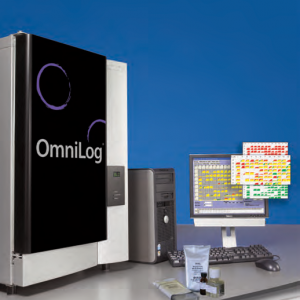 Phenotype MicroArrays for Mammalian Cells Using Biolog’s Phenotype MicroArray™ Technology, any type of cell can be characterised for metabolically related phenotypes in over 1,000 assays in a simple, rapid, and cost-effective manner. By measuring a cell’s metabolic activity, including responses to a genetic alteration or chemical stimuli, this integrated system of cellular assays, instrumentation, and bioinformatic software reveals unique and insightful information on metabolic pathway activities, and cellular sensitivity to nutrients, hormones, cytokines, anti-cancer agents, and ions. By measuring energy output of cells, the technology also provides new assays for understanding mitochondrial function and toxicity. Phenotype MicroArrays enable insight and discovery to expedite scientific publications. This is accomplished using 96 well microplates, pre-loaded with hundreds of KEGG pathway-matched metabolic substrates, and metabolic effectors. Phenotype MicroArrays are a proven method of cellular screening that is beneficial in a wide range of research applications:
- Genotype/phenotype studies
- Cell line characterisation and QC
- Cellular metabolism, metabolic disorders, nutrition
- Cell energetics growth and death
- Hormone effects on cells
- Metabolic reprogramming in cancer, Warburg effect, anti-cancer drug sensitivity
- Mitochondrial toxicology in chemical/drug screens
- Stem cells and differentiation
- Cell line and bio process development
-
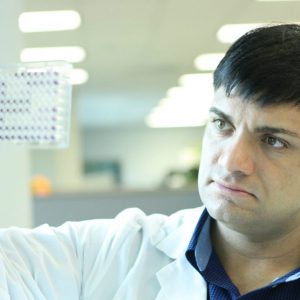 Test gram negative and gram positive bacteria in the same test panel Rapidly and accurately identify over 2,900 species of aerobic and anaerobic Bacteria, Yeasts, and Fungi using the Biolog Gen III Identification Phenotypic technology. Biolog’s advanced phenotypic technology provides valuable information on the properties of strains, in addition to a species-level identification. Molecular methods such as 16s sequencing and MALDI-TOF provide no information about the properties of the strain. Biolog’s carbon source utilisation technology identifies environmental and pathogenic microorganisms by producing a characteristic pattern or “metabolic fingerprint” from discrete test reactions performed within a 96 well microplate. Culture suspensions are tested with a panel of pre-selected assays, then incubated, read and compared to our extensive databases.
- No Gram Stain
- No pre-tests
- No follow-on tests
- One panel for both Gram Negative & Gram Positive bacteria
- One minute set-up
- Over 1350 species coverage
-

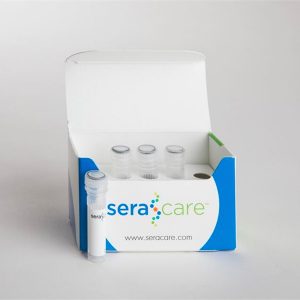 SeraCare’s SARS-CoV-2 Quality Solution AccuPlex™ SARS-CoV-2 Reference Material, from SeraCare, is designed to measure day-to-day performance of the assay, providing both a positive and a negative reference solution. The product is available in versions that offer different SARS-CoV-2 sequence coverage: Version 1 covers the CDC and WHO consensus sequences, Version 2 has been enhanced to also include the S gene region, and Version 3 is expanded to include the full SARS‐CoV‐2 viral genome (Table 1). All products also include negative reference materials targeting the human RNase P gene. AccuPlex™ SARS-CoV-2 Verification Panel, coupled with the AccuPlex™ SARS-CoV-2 Reference Material, is a complete Quality Solution. Both products are available in three versions with different SARS-CoV-2 sequence coverage: Version 1 covers the CDC and WHO consensus sequences, Version 2 has been enhanced to also include the S gene region, and Version 3 is expanded to include the full SARS-CoV-2 viral genome (Table 1). All products also include negative reference materials targeting the human RNase P gene.
- Non-infectious and replication deficient, enables safe handling of positive material
- Fully-extractable with a real viral protein coat; serves as a full-process reference material
- Compatible with assays targeting CDC and WHO consensus sequences
- Includes negative reference material for targeting sequences for the human RNAse P gene
- 2 year stability at 2 - 8°C
- Customisable to sequences of interest to meet unique assay design requirements
-
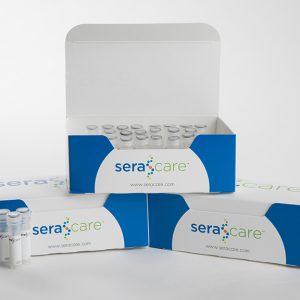 Full Genome Coverage now available AccuPlex™ SARS-CoV-2 Verification Panel, from SeraCare, is optimised for assay verification at installation by documenting test performance along the assay’s range enabling laboratories to establish lower limits of detection, perform assay comparisons, and evaluate staff proficiency. The product contains positive materials including the full SARS-CoV-2 viral genome, and negative materials targeting the human RNase P gene. AccuPlex™ SARS-CoV-2 Verification Panel, coupled with the AccuPlex™ SARS-CoV-2 Reference Material, is a complete Quality Solution designed to challenge the entire molecular test procedure ensuring clinical laboratories can have confidence in their SARS-CoV-2 assay results.
- Non-infectious and replication deficient, enables safe handling of positive material
- Fully-extractable with a real viral protein coat; serves as a full-process reference material
- Compatible with assays targeting CDC and WHO consensus sequences
- Includes negative reference material for targeting sequences for the human RNAse P gene
- 2 year stability at 2 - 8°C
- Customisable to sequences of interest to meet unique assay design requirements
-

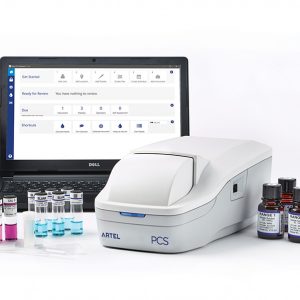 Ensure data integrity, reliable test results, and regulatory compliance. Easily calibrate pipettes, perform interim verifications, standardise operator skills, manage pipette inventory, and more with the Artel PCS® Pipette Calibration System. Fast, accurate, and precise, the PCS is a portable and easy-to-use volume verification system that simplifies single-channel pipette calibration, interim volume verification, and pipette user/operator training and competency assessment. Paired with the included PCS Software, the PCS helps you stay on top of your pipette inventory with calibration and interim verification scheduling, email notifications, pipette and pipette operator status, and comprehensive, auditable documentation. Easily meet both external regulatory requirements and internal quality standards to ensure data quality. The power of the PCS stems from the ratiometric photometry technology and standardised dye solutions that are used to measure dispensed volumes. The system is robust against differences in environmental conditions and calibration results are traceable to NIST standards, enabling straightforward comparison of pipettes, operators, methods, and locations.
 -
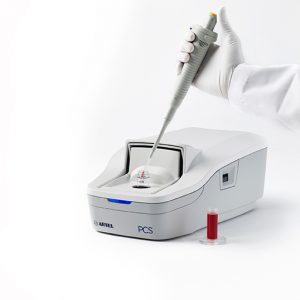
 Ensure pipettes are performing properly and operator skills are standardized Manage your pipette calibration program and assess operator competency. Used in combination with the Artel PCS, the PCS Software ensures your pipettes and their operators are working together to generate accurate and reproducible results. The PCS Software provides scheduling for pipette calibrations and interim performance verifications; complete documentation and pipette inventory management, even for pipettes calibrated outside of PCS Software – and it’s ideal for standardising pipetting technique and assessing operator competency.
 -

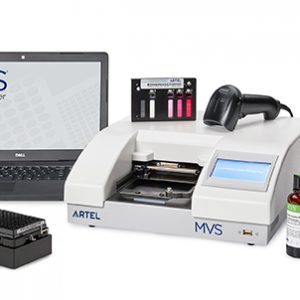 Accelerate assay optimisation, simplify regulatory compliance, and ensure quality. Understand and manage the performance of your automated liquid handlers, multichannel pipettes, labware, operators, and more. Compatible with virtually all automated liquid handling systems and multichannel handheld pipettes, the Artel MVS sits on a mobile workstation for portable rapid calibration, verifications and optimization of dispensed volumes with high precision and accuracy. The MVS’s unique, dual-dye photometric measurements are robust against environmental influences and traceable to SI units to enable comparison across operators, protocols, equipment, and locations. Using the Calibrator Plate, Verification Plates, and an Artel-certified Plate Reader, the MVS supports an unbroken chain of traceability to national and international standards.
 -
Accelerate assay optimisation, simplify regulatory compliance, and ensure quality. Understand and manage the performance of your automated liquid handlers, multichannel pipettes, labware, operators, and more. Compatible with virtually all automated liquid handling systems and multichannel handheld pipettes, the Artel MVS sits on a mobile workstation for portable rapid calibration, verifications and optimization of dispensed volumes with high precision and accuracy. The MVS’s unique, dual-dye photometric measurements are robust against environmental influences and traceable to SI units to enable comparison across operators, protocols, equipment, and locations. Using the Calibrator Plate, Verification Plates, and an Artel-certified Plate Reader, the MVS supports an unbroken chain of traceability to national and international standards.
-
Ensure pipettes are performing properly and operator skills are standardized Manage your pipette calibration program and assess operator competency. Used in combination with the Artel PCS, the PCS Software ensures your pipettes and their operators are working together to generate accurate and reproducible results. The PCS Software provides scheduling for pipette calibrations and interim performance verifications; complete documentation and pipette inventory management, even for pipettes calibrated outside of PCS Software – and it’s ideal for standardising pipetting technique and assessing operator competency.
-
Ensure data integrity, reliable test results, and regulatory compliance. Easily calibrate pipettes, perform interim verifications, standardise operator skills, manage pipette inventory, and more with the Artel PCS® Pipette Calibration System. Fast, accurate, and precise, the PCS is a portable and easy-to-use volume verification system that simplifies single-channel pipette calibration, interim volume verification, and pipette user/operator training and competency assessment. Paired with the included PCS Software, the PCS helps you stay on top of your pipette inventory with calibration and interim verification scheduling, email notifications, pipette and pipette operator status, and comprehensive, auditable documentation. Easily meet both external regulatory requirements and internal quality standards to ensure data quality. The power of the PCS stems from the ratiometric photometry technology and standardised dye solutions that are used to measure dispensed volumes. The system is robust against differences in environmental conditions and calibration results are traceable to NIST standards, enabling straightforward comparison of pipettes, operators, methods, and locations.