-

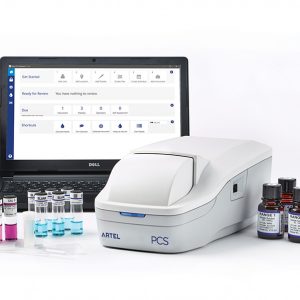 Ensure data integrity, reliable test results, and regulatory compliance. Easily calibrate pipettes, perform interim verifications, standardise operator skills, manage pipette inventory, and more with the Artel PCS® Pipette Calibration System. Fast, accurate, and precise, the PCS is a portable and easy-to-use volume verification system that simplifies single-channel pipette calibration, interim volume verification, and pipette user/operator training and competency assessment. Paired with the included PCS Software, the PCS helps you stay on top of your pipette inventory with calibration and interim verification scheduling, email notifications, pipette and pipette operator status, and comprehensive, auditable documentation. Easily meet both external regulatory requirements and internal quality standards to ensure data quality. The power of the PCS stems from the ratiometric photometry technology and standardised dye solutions that are used to measure dispensed volumes. The system is robust against differences in environmental conditions and calibration results are traceable to NIST standards, enabling straightforward comparison of pipettes, operators, methods, and locations.
 -
 Ensure data integrity, reliable test results, and regulatory compliance. Easily calibrate pipettes, perform interim verifications, standardise operator skills, manage pipette inventory, and more with the Artel PCS® Pipette Calibration System. Fast, accurate, and precise, the PCS is a portable and easy-to-use volume verification system that simplifies single-channel pipette calibration, interim volume verification, and pipette user/operator training and competency assessment. Paired with the included PCS Software, the PCS helps you stay on top of your pipette inventory with calibration and interim verification scheduling, email notifications, pipette and pipette operator status, and comprehensive, auditable documentation. Easily meet both external regulatory requirements and internal quality standards to ensure data quality. The power of the PCS stems from the ratiometric photometry technology and standardised dye solutions that are used to measure dispensed volumes. The system is robust against differences in environmental conditions and calibration results are traceable to NIST standards, enabling straightforward comparison of pipettes, operators, methods, and locations.
 -
Ensure data integrity, reliable test results, and regulatory compliance. Easily calibrate pipettes, perform interim verifications, standardise operator skills, manage pipette inventory, and more with the Artel PCS® Pipette Calibration System. Fast, accurate, and precise, the PCS is a portable and easy-to-use volume verification system that simplifies single-channel pipette calibration, interim volume verification, and pipette user/operator training and competency assessment. Paired with the included PCS Software, the PCS helps you stay on top of your pipette inventory with calibration and interim verification scheduling, email notifications, pipette and pipette operator status, and comprehensive, auditable documentation. Easily meet both external regulatory requirements and internal quality standards to ensure data quality. The power of the PCS stems from the ratiometric photometry technology and standardised dye solutions that are used to measure dispensed volumes. The system is robust against differences in environmental conditions and calibration results are traceable to NIST standards, enabling straightforward comparison of pipettes, operators, methods, and locations.
-

 Introducing the ILAS 4000 Robot The new ILAS 4000 robot is a unique solution to automate and standardise sample preparation for bacteria counters up to a maximum speed of 200 samples/hour. Fully refrigerated, samples are identified (RFID chips or barcode), homogenised, uncapped and analysed. The vials are automatically recapped after analysis and place back in their original tray position. Compatible with the BactoCount IBC Series: Bacteria & Somatic Cells Counter and alternative methods. The Standardisation Tray used for Laboratory Automation is compatible with the ILAS Robot.
 -
 Introducing the ILAS 3000 Robot The combination of the Bentley Instruments and high-tech robotics allows the complete automation and standardisation of the analytical chain and MSDs reduction. With the ILAS 3000 Robot, an operator can manage up to 3 lines simultaneously. Always with a goal of enhanced productivity and standardisation, this system analyses up to 600 samples/hour. Compatible with the Combi FTS Series: Infrared Analyser & Somatic Cells Counter and alternative methods. The Standardisation Tray used for Laboratory Automation is compatible with the ILAS Robot.
 -
 Real-Time enumeration of individual Bacteria & Somatic Cells in raw milk Automatic milk analysis at 200 samples/hour The BactoCount series (50, 100, 150, 200) uses flow cytometry for the real-time determination of total flora and somatic cells in raw milk up to a maximum speed of 200 analysis/hour. The high speed of this model makes it the ideal solution for mid to large size laboratories that need an easy to maintain, exceptionally fast bacteria counting system. The BactoCount IBC Series uses a proprietary process based on flow cytometry for the rapid, highly accurate, reliable and multiplex enumeration of individual bacteria and somatic cells in raw milk. The sampling, sequencing and identification of the sample vials are functions performed by the Autosampler. Compatible with the ILAS 4000 ROBOT: Automation System for Bacteria Counter
 -
 Real-Time enumeration of individual Bacteria & Somatic Cells in raw milk Semi-Automatic version up to 50 analysis/hour The new BactoCount IBCm 3.0 is a semi-automated instrument that uses a proprietary process based on next-generation flow cytometry for the rapid, highly accurate, reliable and multiplex enumeration of individual bacteria and somatic cells in raw milk. The rapid test for bacteria and somatic cells makes it the ideal solution for any processing plant or laboratory involved in the quality assessment of milk. The instrument offers multiplex applications thanks to its unique dedicated platform. Up to two applications can be run simultaneously on a given sample. The overall design of the instrument has also been designed to allow ease of access and maintenance. With this in mind, IBCm 3.0 embeds a new kinetic, self aligned flow cell mounting system. The BactoCount IBCm 3.0 can be equipped with a conveyor, automating the sampling at a maximum rate of 50 analysis/hour. The sampling, sequencing and identification of the sample vials are functions performed by the Autosampler. Compatible with the ILAS 4000 ROBOT: Automation System for Bacteria Counter
 -
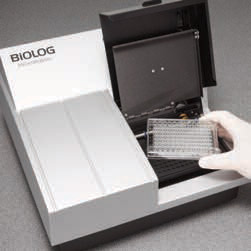
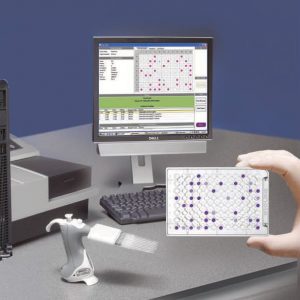 For rapid identification of bacteria, yeast, and filamentous fungi. The GEN III MicroStation System has the capacity to read all Biolog MicroPlate™ configurations. The MicroStation™ ID System is a versatile system, with the ability to identify and characterize a wide range of environmental and pathogenic organisms across diverse fields of microbiology. Using all Biolog databases, over 2650 species of bacteria, yeast and filamentous fungi can be identified in as little as 2 hours. Just prepare a cell suspension and inoculate the appropriate MicroPlate™. After inoculation and incubation, the MicroPlate™ is placed into the MicroStation™ Reader for analysis. The unique metabolic pattern generated by the organism is recorded and compared to hundreds of identification profiles in a corresponding Biolog Database. The versatile plate reader uses dual wavelength readings to quantify color reactions in the MicroPlate™ wells, adding consistency and accuracy when reading the reaction patterns. Biolog’s patented redox chemistry makes use of different carbon compounds including sugars, carboxylic acids, amino acids and peptides to provide an unparalleled wealth of discriminating biochemical characterizations. This diverse set of tests enables our systems to identify microorganisms that other kit-based methods misidentify or fail to identify. The MicroStation™ System, as well as the OmniLog® System, has extensive applications also for microbial community analysis in soil, water, biofilms and other environments.
 -

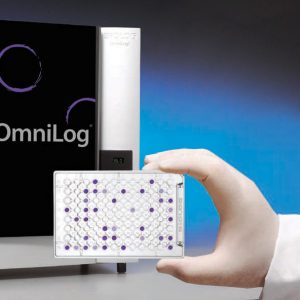 Full automation to meet the demands of a dynamic workflow The OmniLog® ID System offers a simple automated process to meet the dynamic workflow demands of a wide range of microbiology applications. Even organisms requiring special incubation temperatures or environments are easily accommodated, ensuring accurate identification for a broad spectrum of Gram-negative and Gram-positive bacteria. The OmniLog® ID System fully automates the process of microbial identification by incubating, reading and interpreting results from up to 50 Biolog MicroPlates™ at a time. The system software provides directives to guide all steps of the testing process for each MicroPlate™, including sample placement and removal and extended incubation when needed. Additional MicroPlates can be loaded and processed anytime there is an open tray or identification has been completed on a previously entered MicroPlate™. Up to date information for each MicroPlate™, including results as they become available, are continuously visible on the system’s menu screen. Identifications take as little as 2 hours. The OmniLog® Plus ID System adds testing capabilities for anaerobic bacteria, yeasts and filamentous fungi. Both OmniLog® systems allow results to be saved to create a customized database or to track specific organism characteristics and frequency of isolation. The system software, which includes the RetroSpect™ software module for organism tracking and trending, is extremely easy to navigate, and provides all the required functionality to meet 21CFR part 11 electronic record requirements and regulatory compliance. Administrative features are also available to control operator access and the creation or modification of data files.
 -

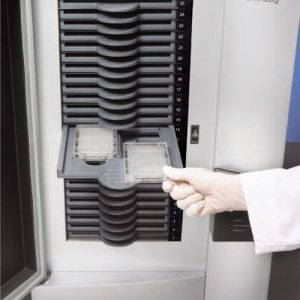 Fully Automated Phenotype MicroArray System The Biolog OmniLog® incubates and monitors 50 microplates, or 1,920 phenotypic assays simultaneously to measure physiological responses in diverse microbial cells. The OmniLog PM system includes software for analysis of Biolog Phenotype MicroArray panels. The OmniLog II Combo System has additional software and a database for identification of aerobic bacteria using Biolog’s Gen III microplates. The OmniLog II Combo Plus System adds the capability for identifying anaerobes, yeast and filamentous fungi. Each system includes the OmniLog instrument, software as indicated, multimedia computer, LCD flat panel monitor, 8-channel electronic pipettor, turbidimeter, user guide, training and 1-year warranty. The OmniLog II Combo system also include the Biolog MicroStation™ Reader and a printer. Organism databases (for microbial identification), consumables and other accessories are purchased separately.
 -

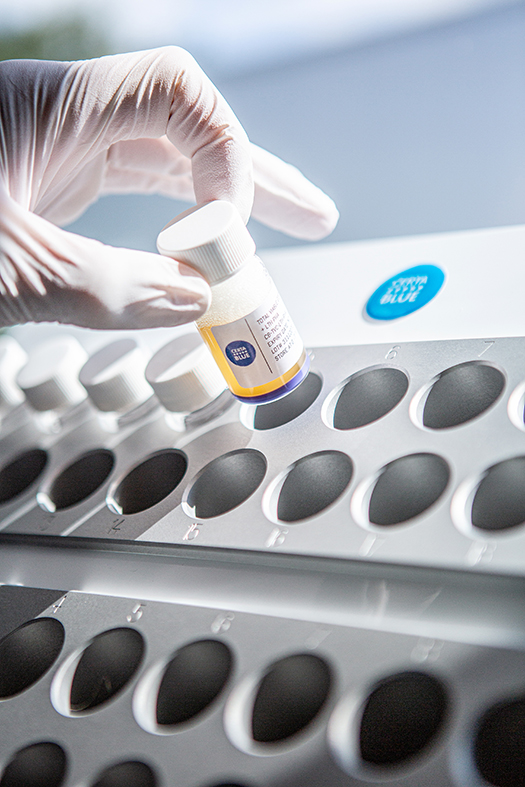 Why wait? TECHNOPATH partners with CertaBlue for their rapid microbiology technology. CertaBlue is based on rapid detection of several metabolic processes that take place within the growing organism. The system can detect colour changes through highly sensitive optical sensors. All vials are ready to use, prefilled with media and equipped with CertaBlue sensors. In most cases, the vials can be inoculated with a non-diluted high volume sample. The CertaBlue vials contain an optical sensor, which can detect carbon dioxide as the universal indicator for microbial growth. The sensor is placed in the bottom of the vial, where it directly detects carbon dioxide changes. CertaBlue sensors are only permeable for gases. Liquids, dyed / heavily coloured products and other particles can’t falsify results. What can CertaBlue offer you:
- Simplified test procedures
- Ready-to-use vials including media and CertaBlue sensor
- Test procedure consists of just adding your sample to the vial
- Results in hours instead of days
- Real-time detection and early warning of positive samples
- Ensures a quick and safe product release
- Better recovery of injured and / or damaged microorganisms
-

 Reliable device for thrombocyte preservation and storage Introducing the CLIMAX Climatic Chamber from LMB. Combination of climax and thrombocyte shaker keeps your thrombocytes in constant motion and at 22 °C. Use in conjunction with the Thrombocyte shakers. Available in two sizes, the CLIMAX 100, CLIMAX 120.
 -

 Rapid, Automated and Remote Microbial Testing for Water and Food Safety Colifast ALARM™ is an electronic instrument for detecting indicator bacteria in drinking water using patented Colifast technology. 100 ml water samples are automatically collected at programmed intervals and analyzed for total coliforms, thermotolerant coliform bacteria or E. coli. In addition to performing rapid, online microbial water analysis, Colifast ALARM measures water turbidity. The system can automatically send results to control rooms / operators via LAN, digital signals or via mobile networks (SMS). The system can detect down to 1 cfu / 100 mL, and results are achieved within 6-14 / 15 hours. Technology The main components of Colifast ALARM are the incubator chamber, an injection pump system for fluid handling, and a detector system that includes wavelength-specific emitters combined with a spectrometer. Detection of down to 1 viable target bacteria is based on bacterial growth, group-specific enzyme activity and measured concentrations of a fluorescent product (ppb MU). An increase in the number of target bacteria means an increase in the amount of β-D-glucuronidase (E. coli-specific enzyme). The enzyme hydrolyses the growth medium substrate to MU (the fluorescent product) and β-D-glucuronic acid. Increased MU release gives increased fluorescence signal on the Colifast ALARM. Colifast growth medium contains inhibitors to prevent growth of non-coliforms. Colifast ALARM is verified by EPA's ETV program.
 -
 The Colifast At-Line Monitor – CALM is a fully automated early warning system for monitoring of coliforms and Pseudomonas aeruginosa in water. Detection time ranges from 2 to 12 hours. The technology is time-saving, cost-reducing, and environmentally friendly. Examples of CALM applications are monitoring of raw water, in-process water, waste water and recreational water. No laboratory facilities and minimal skills in microbiology are required to operate the instrument. The Colifast CALM is easily connected to the system computer or LAN interface. The patented Colifast growth media are supplied in Pre-filled Multi Well Trays™ and the flexibility of the system makes it easy to adapt to different applications. The CALM can perform parallel analysis of different target organisms. Depending on method and test frequency, the CALM needs monthly or weekly refilling of reagents. Technology The CALM instrument detects and quantifies E. coli, fecal or total coliform bacteria in water by fluorometric monitoring of β-glucuronidase activity (E. coli) or β-galactosidase activity (fecal and total coliforms). The detection of P. aeruginosa is based on substrate hydrolysis of aminopeptidase enzymes present in this bacterium. The Colifast technology is comprised of unique media formulations combined with instrument detection systems. The technology is covered by patents in numerous countries, with several international patents pending. Growth of other bacteria is stopped by inhibitors in the medium and by incubation of the samples at high temperature: Incubator temperatures for selection of thermotolerant coliform bacteria are 44 ° C and total coliforms / E. coli are 37 ° C. Method The instrument can perform one of two methods at a time. The Most Probable Number (MPN) method is based on the cultivation of bacteria. A certain volume is added to 4-6 wells of growth medium and the bacterial number is determined from how many of the wells that gave growth after the incubation period (11-12 hours). For the results to be as accurate as possible, it is therefore important that the samples taken on a given source usually give a mixture of positive and negative results. The rapid method is also a quantitative method, which is based on the enzyme activity of the bacteria present in the water sample. It provides response after 75-115 min and is suitable for water sources where major contamination events can occur. The CALM is a flexible instrument. This means that the instrument can be adapted to different locations with different occurrence of bacteria. If a source has an average bacterial count of 500 cfu / 100ml, 0.2 ml will usually give a positive test. By injecting about half of this volume, you will often get both positive and negative samples. If the source has lower concentrations of bacteria, the media concentration can be changed so that the sample volume can be as high as 10 ml. In this way, we ensure good results from the CALM instrument with optimal concentration of media after addition of sample and a sample volume appropriate for the source being measured.
 -
 Colifast Field Kit is a portable tool for field detection of coliform bacteria in water. The main method of the kit is a rapid method that provides an answer as early as 15 minutes, 2 hours at the latest. In addition, the kit includes methods for a quantitative MPN (Most Probable Number) method and presence/absence results. The procedure is very easy to perform, and requires no laboratory skills. Colifast Field Kit is delivered in a robust and portable metal case, and all equipment required for the water analysis is included. The Colifast Micro Detector (CMD) is used in combination with a growth medium for specific detection of target bacteria. Combined, they provide a simple instrumental analysis and rapid results that quantify the amount of coliform and thermotolerant bacteria in water. The method is based upon the patented technology of Colifast AS. The system detects down to 1 target bacterium per sample volume. Method The Colifast technology is based on a chemical reaction between a substrate in the growth medium and enzymes produced by the coliform bacteria. The bacterial enzyme β-D-galactosidase hydrolyses the substrate 4-methylumbelliferyl-β-D-galactoside, which results in the release of the fluorescent product 4-methylumbelliferone (MU). In addition to substrate, activators and growth factors, the medium comprises inhibitors that prevent the growth of non-coliform bacteria. The results are measured in fluorescent units. An increase in the number of bacteria corresponds to an increased amount of β-D-galactosidase (enzyme). The subsequent increase in the amount of MU (fluorescent product) results in a higher value on the instrument (Colifast Micro Detector). The incubation temperature selects for thermotolerant coliforms at 44 °C and total coliforms at 37 °C.
 -
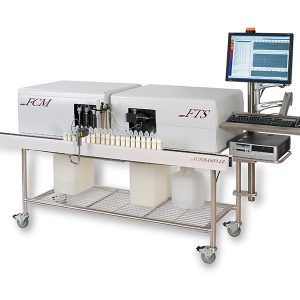 Rapid & accurate determination of Somatic Cells and Chemical Composition in raw milk Automatic milk analysis at 600 samples/hour Engineered in accordance with Bentley Instruments’ rigorous design principles, the FTS combi provides precise and accurate measurements. The FTS combi comprises two separate modules — the Bentley Flow Cytometer (FCM), and the Bentley Fourier Transform Spectrometer (FTS). The FCM measures the somatic cell count of the milk samples while the FTS simultaneously measures the milk composition up to 64 parameters (fat, protein, lactose, casein, fatty acids profil, minerals, blood BHB,...). After first being stirred, the milk is drawn from a sample vial and delivered to both measurement modules. The sampling, sequencing and identification of the sample vials are functions performed by the Autosampler. 3M™ Clean-Trace™ Surface ATP UXL100 3M™ Clean-Trace™ Water Plus - Total ATP AQT200 3M™ Clean-Trace™ Water - Free ATP AQF100
 -
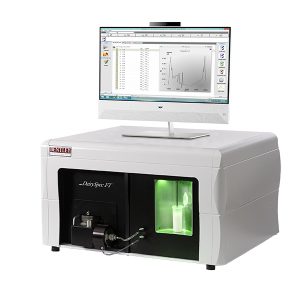 Rapid and accurate determination of milk products chemical composition Semi-automatic and automatic versions from 100 up to 300 samples/hour The DairySpec FT uses FTIR spectroscopy for extremely accurate and reliable milk and dairy products chemical composition determination. Analysing up to 64 parameters simultaneously, the DairySpec FT is the optimal solution for the quality control of raw and processed materials. It gives access to the very fine analysis of milk and dairy products chemical composition (fat, proteins, casein, lactose, solids, urea, citric acid, fatty acids profil, FPD). Highly reliable and accurate for milk (raw, UHT, ...) and dairy products (cream, whey, permeate, retentate, ...) analysis. Adaptable to measure other products and parameters upon request. The spectra are standardised in real time to optimise calibrations transferability, stability and qualitative analysis (adulteration). Direct access to spectra for the development of new calibrations. 3M™ Clean-Trace™ Surface ATP UXL100 3M™ Clean-Trace™ Water Plus - Total ATP AQT200 3M™ Clean-Trace™ Water - Free ATP AQF100
 -
 Simultaneous Somatic Cell and Component Analysis Automatic versions from 100 up to 300 samples/hour System that combines the DairySpec FT for component analysis and the SomaCount FC for Somatic Cell Counting. The combination of these two flagship methods provides a complete overview of milk chemical and hygienic composition by analysing up to 64 parameters simultaneously. Different versions of DairySpec Combi are available (100, 150, 200, 250, 300) up to a maximum speed of 300 samples/hour. The sampling, sequencing and identification of the sample vials are functions performed by the Autosampler. Compatible with the ILAS 3000 ROBOT: Automation System for Milk Analysers
 -
 Drug Discovery with Biolog Technologies BiOLOG’s Phenotype MicroArray™ Technology for Microbial and Mammalian Cells, and new MitoPlate™ assays are used by pharmaceutical companies, biotech’s and academic institutions to assist with new drug target identification and drug re-purposing, and any applications in the process of developing solutions for the treatment and curing of disease. Benefits of Phenotype MicroArrays in Drug Discovery:
- Complement DNA microarrays. DNA microarrays allow scientists to measure the expression of thousands of genes of a cell under one growth condition, whereas Phenotype MicroArrays allow scientists to measure the effect of one gene in the cell under thousands of growth conditions.
- Provide rapid answers to critical questions about cellular properties in a simple, rapid, efficient, and cost- effective process.
- Provide rapid answers to how a gene of unknown function affects a cell at a physiological level.
- Provide cell-to-cell comparisons to find novel drug targets based on in vivo physiological differences.
- Provide a means to assay the effect of a drug on thousands of cellular targets under thousands of physiological states of the cell.
- Provide rapid answers to questions about how a new lead affects a cell at a biochemical level.
- Provide information on how new drug leads compare to and interact with existing drugs.
- Reduce the time and cost of slow and cumbersome animal, plant, or human studies in late development.
- Eliminate unproductive leads and projects, saving substantial R&D budget dollars that would be wasted in later development.
-
 Separation of whole blood - two bag systems simultaneously on one device The Dualpress from LMB is a high quality device for whole blood separation. 6 Bag sensors on each side guarantee stable buffy coat level during separation. Touchscreen with easy menu navigation.
 -

 Examine environmental community diversity with Biolog EcoPlates™ Biolog EcoPlates provide a sensitive and reliable index of environmental change. This approach, called community-level physiological profiling (CLPP), is effective at distinguishing spatial and temporal changes in the metabolism of microbial communities. Microbial communities provide useful information about environmental change. Microorganisms are present in virtually all environments and are typically the first organisms to react to chemical and physical changes in the environment. Changes in microbial communities are often a precursor to changes in the health and viability of the environment as a whole. 31 carbon assays in triplicate EcoPlates contain 3 repeated sets of 31 carbon sources and employ a tetrazolium redox dye as an indicator of microbial metabolism. As microbes utilise the carbon sources they respire and the tetrazolium reporter dye is reduced to form a visible purple colour. Communities of microorganisms will exhibit a characteristic reaction pattern, a metabolic fingerprint, that reflects the metabolic properties of the community.
- Measure the metabolism of 31 carbon sources per assay
- Each assay panel tests in triplicate
- Simple colorimetric readout
- Readable with any microplate reader
-

 Introducing EMMA from Microtechnix EMMA is developed to digitise your Pharmaceutical Microbiology QC workflow. The (patent-pending) optical system captures 100% representative images for downstream analysis assisted by vision AI. This unique optical acquisition system allows to digitize your documentation process to ensure full data integrity. EMMA is a fully integrated system: including camera, built-in barcode reader and operating system.
 -
 Introducing EMMA HT from Microtechnix EMMA HT can standardise and fully automate your Microbiological Environmental Monitoring. The (patent-pending) optics system captures ultra-precise images and uses artificial intelligence to analyse your samples. Perfect for environmental monitoring assays. This unique optical acquisition system allows to acquire high resolution image of 100% of the plate surface, including the wall (meniscus) of the Petri dish, and standardise your documentation process to ensure 100% data integrity. EMMA HT is a fully integrated system: including 2 EMMA devices, barcode reader, computer and the robot.
 -
 Introducing EMMA RL from Microtechnix EMMA RL provides a comprehensive solution to digitise & automate your pharmaceutical microbiology QC. The (patent-pending) optical system captures ultra-precise images and uses vision AI to analyse your data. This unique optical system allows to acquire 100% of the Petri dish content, including the wall & meniscus of the Petri dish. This allows the detection of any colony on the Petri Dishes, ensuring zero false negatives. This solution is fully integrated and automated.
Call Us: +44 (0)28-30833808