-

 Multichem AMH Control, from Technopath Manufacturing Ltd, is intended for use as a third party, tri-level, liquid stable quality control material to monitor the precision of laboratory testing procedures for Anti Mullerian Hormone Assays. The product will typically be run to provide a minimum of 2 levels of control to monitor AMH assay performance within the analytical ranges. Multichem AMH Control will be run after reagent calibration and at a frequency dictated by laboratory QC procedures and reagent / instrument manufacturer instructions. The product should be treated the same as patient specimens and run in accordance with the instructions accompanying the instrument, kit or reagent being used. The Control is to be stored at -20°C to –80°C and thawed as per IFU prior to use. The product is to be stored at 2 to 8°C between use.
 -

 CE Marked Special Coagulation Controls from Biomedica Diagnostics are intended to be used as unassayed controls for monitoring the performance of special and routine coagulation assays on analyzers in a clinical setting. The controls are to be tested in the same manner as freshly drawn citrated patient plasma. The controls are available within the normal and abnormal ranges and suitable for use in eighteen (18) parameters.
 -

 Multichem D-Dimer Control, from Technopath Manufacturing Ltd, is intended for use as a third party, bi-level, liquid stable quality control material to monitor the precision of laboratory testing procedures for D-Dimer Assays. Multichem D-Dimer Control is intended for use as a third party, bi-level, liquid stable quality control material to monitor the precision of laboratory testing procedures for D-Dimer Assays. Multichem D-Dimer Control is designed as a bi-level, liquid stable frozen product. The product will typically be run to provide a minimum of two levels of control to monitor D-Dimer assay performance within the analytical ranges. Multichem D-Dimer Control will be run after reagent calibration and at a frequency dictated by laboratory QC procedures and reagent / instrument manufacturer instructions. The product should be treated the same as patient specimens and run in accordance with the instructions accompanying the instrument, kit or reagent being used. The Control is to be stored at -20°C to -80°C and thawed as per IFU prior to use. The product is to be stored at 2 to 8°C between use.
 -
 Third party, single elevated level, liquid stable quality control material to monitor the precision of laboratory testing procedures for Bilirubin and Theophylline Assays. Multichem NB (Neonatal Bilirubin) Control, from Technopath Manufacturing Ltd, is intended for use as a third party, single level, liquid stable quality control material to monitor the precision of laboratory testing procedures for Bilirubin and Theophylline Assays. An important patient population is Neonates, where a requirement has been identified for testing conditions associated with Neonatal hyperbilirubinemia. The product also contains Theophylline, a therapeutic drug that is given to Neonates to improve lung capacity and where it would be required to monitor for toxicity risk. Caffeine is a listed analyte that is added gravimetrically, and this has a clinical function as the primary treatment of the breathing disorders apnea of prematurity. Another important population is with any patient that has liver failure. It is important if the laboratory tests hyperbilirubinemia patient samples that they analyze QC regularly to monitor this range to ensure accuracy and precision at these elevated levels. The requirement for a high concentration of Bilirubin presents a conflict for consolidation of multi-analytes. This means that not only is a separate paediatric control required, but a control matrix that is treated with antioxidants to inhibit the oxidation of Bilirubin. The application of the most appropriate measures to reduce the effect of oxidation on the high levels of Bilirubin in the Control have been researched to ensure that open vial and closed stability is maintained. Multichem NB Control is designed as a single level, liquid stable frozen product. The product will typically be run as a supplementary high level control, in conjunction with at least one of the Multichem Serum Control levels, (S or S Plus) to provide a minimum of 2 levels of control to allow assay system performance monitoring within the analytical ranges. It will be run after reagent calibration and at a frequency dictated by laboratory QC procedures and reagent / instrument manufacturer instructions. The product should be treated the same as patient specimens and run in accordance with the instructions accompanying the instrument, kit or reagent being used. The control is to be stored at -20°C to –80°C and thawed as per IFU prior to use. The product is to be stored at 2 to 8°C between use.
 -
 Multichem AE (Ammonia Ethanol) Control, from Technopath Manufacturing Ltd, is intended for use as a third party liquid stable quality control material to monitor the precision of laboratory testing procedures for Ammonia and Ethanol Assays. Multichem AE Control is designed as a liquid stable frozen product. The product will typically be run after reagent calibration and at a frequency dictated by laboratory QC procedures and reagent / instrument manufacturer instructions. The product should be treated the same as patient specimens and run in accordance with the instructions accompanying the instrument, kit or reagent being used. The control is to be stored at -20°C to –80°C and thawed as per IFU prior to use. The product is to be stored at 2 to 8°C between use.
 -
 Multichem WBT Control, from Technopath Manufacturing Ltd, is intended for use as a third-party, tri- level, liquid stable quality control material to monitor the precision of laboratory testing procedures for Cyclosporine, Tacrolimus and Sirolimus Assays. Multichem WBT Control is designed as a tri-level, liquid stable frozen product. The product will typically be run after reagent calibration and at a frequency dictated by laboratory QC procedures and reagent / instrument manufacturer instructions. The product should be treated the same as patient specimens and run in accordance with the instructions accompanying the instrument, kit or reagent being used. The control is to be stored at -20°C to –80°C and thawed as per IFU prior to use. The product is to be stored at 2 to 8°C between use.
 -

 Third party, bi-level, liquid stable, multi-analyte quality control material to monitor the precision of laboratory testing procedures for Cerebral Spinal Fluid Assays. Multichem CSF, from Technopath Manufacturing Ltd, contains 4 analytes including CSF glucose, protein, IgG and lactate. Multichem CSF Controls are designed as bi-level, liquid stable frozen products. These products will typically be run after reagent calibration and at a frequency dictated by laboratory QC procedures and reagent / instrument manufacturer instructions. The products should be treated the same as patient specimens and run in accordance with the instructions accompanying the instrument, kit or reagent being used. The controls are should be stored at -20°C to -80°C and thawed as per IFU prior to use. The products should be stored at 2 to 8°C between use.
 -
 Multichem A1c Control, from Technopath Manufacturing Ltd, is intended for use as a third party, bi- level, liquid stable quality control material to monitor the precision of laboratory testing procedures for Haemoglobin A1c determination Assays. The intended patient population are those with diabetes. The haemoglobin A1c test, also called HbA1c, glycated haemoglobin test, or glycol-haemoglobin, is an important blood test that shows how well a patient’s diabetes is being controlled. Multichem A1c Control is designed as a bi-level, liquid stable frozen product. The product will typically be run after reagent calibration and at a frequency dictated by laboratory QC procedures and reagent / instrument manufacturer instructions. The product should be treated the same as patient specimens and run in accordance with the instructions accompanying the instrument, kit or reagent being used. The control is to be stored at -20°C to –80°C and thawed as per IFU prior to use. The product is to be stored at 2 to 8°C between use.
 -
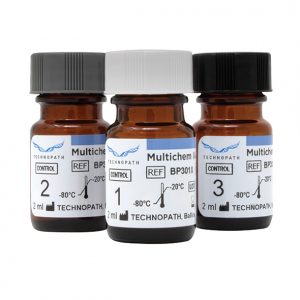 Multichem IA Speciality Immunoassay Controls are intended for use as third party, tri- level, liquid stable, multi-analyte quality control materials to monitor the precision of laboratory testing procedures for Immunoassay Assays. Multichem IA Speciality, from Technopath Manufacturing Ltd, is designed to complement Multichem IA and Multichem IA Plus Immunoassay Controls by offering significantly increased stability for BNP, PTH and ACTH. In addition to these analytes, Multichem IA Speciality Controls also contains and provides tri level utility for Procalcitonin and Calcitonin. Multichem IA Speciality Immunoassay Controls are designed as tri-level, liquid stable frozen products. These products will typically be run after reagent calibration and at a frequency dictated by laboratory QC procedures and reagent / instrument manufacturer instructions. The products should be treated the same as patient specimens and run in accordance with the instructions accompanying the instrument, kit or reagent being used. The controls should be stored at -20°C to –80°C and thawed as per IFU prior to use. The products should be stored at 2 to 8°C between use.
 -
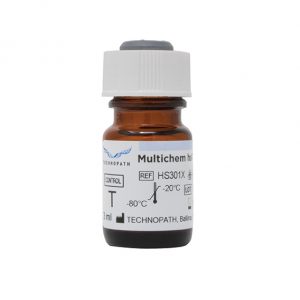 Multichem hsTn Control, from Technopath Manufacturing Ltd, is intended for use as a third party, single level, liquid stable quality control material to monitor the precision of laboratory testing procedures for high sensitive Troponin Assays. The intended patient population is Cardiac patients, where a requirement has been identified for testing conditions associated with elevated levels of Troponin I and Troponin T. Multichem hsTn Control is designed as a single level, liquid stable frozen product. The product will typically be run as a low level/high sensitive control, in conjunction with one other level of the Multichem IA / Multichem IA Plus series of serum controls for the same analytes, after reagent calibration and at a frequency dictated by laboratory QC procedures and reagent / instrument manufacturer instructions. This product design is based on the existing Multichem IA Plus L1 control, but incorporating the required features of a single low level Troponin Control, to supplement the IA Plus Control to monitor the precision of Troponin assay methods, at the low end of the linear dynamic range. The product should be treated the same as patient specimens and run in accordance with the instructions accompanying the instrument, kit or reagent being used. The control is to be stored at -20°C to –80°C and thawed as per IFU prior to use. The product is to be stored at 2 to 8°C between use.
 -
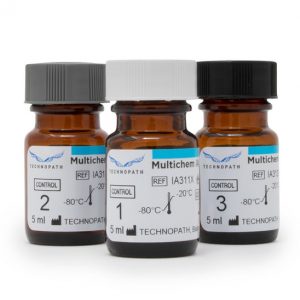
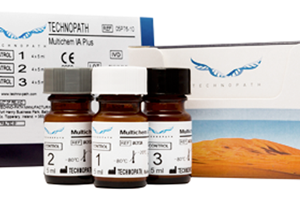 Multichem IA contains 83 analytes including fertility and thyroid hormones, steroid hormones, cardiac markers, anaemia markers, therapeutic drugs, adrenal markers and bone metabolism markers. Multichem IA Control, from Technopath Manufacturing Ltd, is intended for use as a third party, multi-constituent quality control material to monitor the precision of laboratory testing procedures for Immunoassay Assays. Please note: the main difference between Multichem IA Plus and Multichem IA product is the addition of three tumor markers to Multichem IA Plus; CA 125, CA 15-3 and CA 19-9. Multichem IA is designed as a tri-level, liquid stable frozen product. This product will typically be run after reagent calibration and at a frequency dictated by laboratory QC procedures and reagent / instrument manufacturer instructions. The product should be treated the same as patient specimens and run in accordance with the instructions accompanying the instrument, kit or reagent being used. The control should be stored at -20°C to –80°C and thawed as per IFU prior to use. The product should be stored at 2 to 8°C between use.
 -
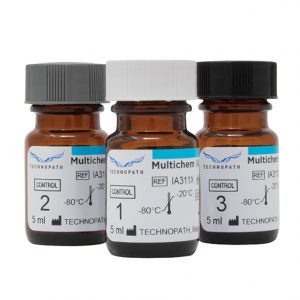 Multichem IA Plus Control is intended for use as a third party, multi-constituent quality control material to monitor the precision of laboratory testing procedures for Immunoassay Assays. Multichem IA Plus contains 86 analytes including fertility and thyroid hormones, steroid hormones, cardiac markers, anaemia markers, therapeutic drugs, adrenal markers, bone metabolism markers and tumour markers. Multichem IA Plus, from Technopath Manufacturing Ltd, is designed as a tri-level, liquid stable frozen product. This product will typically be run after reagent calibration and at a frequency dictated by laboratory QC procedures and reagent / instrument manufacturer instructions. The product should be treated the same as patient specimens and run in accordance with the instructions accompanying the instrument, kit or reagent being used. The control should be stored at -20°C to –80°C and thawed as per IFU prior to use. The product should be stored at 2 to 8°C between use.
 -
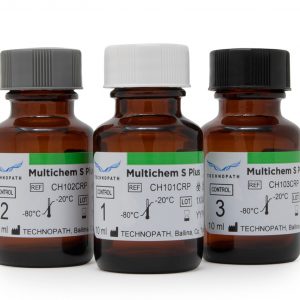 Multichem S Plus Control, from Technopath Manufacturing Ltd, is intended for use as a third party, multi-constituent quality control material to monitor the precision of laboratory testing procedures for Chemistry Assays. It incorporates serum chemistry, immunology, lipid, TDM, enzymes and esoterics. Multichem S Plus contains 105 analytes including the addition of C-Reactive Protein and Rheumatoid Factor at clinically relevant concentrations. Chemistry, Esoterics, Immunoproteins, Enzymes, Lipids, and Therapeutic Drugs are also included. When combined with Multichem P the solution offers an extensive spread of immunoprotein concentrations. Multichem S is also available, please note that Multichem S contains all the same analytes apart from C-Reactive Protein and Rhematoid Factor. Multichem S Plus is designed as a tri-level, liquid stable frozen product. This product will typically be run after reagent calibration and at a frequency dictated by laboratory QC procedures and reagent / instrument manufacturer instructions. The product should be treated the same as patient specimens and run in accordance with the instructions accompanying the instrument, kit or reagent being used. The control should be stored at -20°C to –80°C and thawed as per IFU prior to use. The product should be stored at 2 to 8°C between use.
 -
 Multichem S Control, from Technopath Manufacturing Ltd, is intended for use as third party, tri- level, liquid stable, multi-analyte quality control materials to monitor the precision of laboratory testing procedures for Chemistry and Immunology assays. Multichem S contains 101 analytes (does not include the addition of CRP and RF, which are available in Multichem S Plus) Multichem S Control is designed as a liquid stable frozen product. The product will typically be run after reagent calibration and at a frequency dictated by laboratory QC procedures and reagent / instrument manufacturer instructions. The product should be treated the same as patient specimens and run in accordance with the instructions accompanying the instrument, kit or reagent being used. The control should be stored at -20°C to –80°C and thawed as per IFU prior to use. The product should be stored at 2 to 8°C between use.
 -
 Multichem P (P for protein), from Technopath Manufacturing Ltd, is specifically designed as a supplementary QC product for immunoproteins to be used in conjunction with the Multichem clinical chemistry QC. This product offers elevated concentrations for immunoprotein. Users can use this in conjunction with 1, 2 or 3 levels of Multichem S Plus or Multichem S, each of which already include multiple concentrations for immunoproteins. The full list of products available are shown below. Multichem P Supplementary Immunoprotein Control is intended for use as a third party, single level, liquid stable immunoprotein quality control material to monitor the precision of laboratory testing procedures for Immunoprotein Assays. Target values are provided for 39 analytes, including immunoglobulins, complement proteins, inflammatory proteins as well as carrier and storage proteins. The product will typically be run as a supplementary high level control, in conjunction with at least one of the Multichem Serum Control levels, (S or S Plus) to provide a minimum of 2 levels of control to allow assay system performance monitoring within the analytical ranges. It will be run after reagent calibration and at a frequency dictated by laboratory QC procedures and reagent / instrument manufacturer instructions. The product should be treated the same as patient specimens and run in accordance with the instructions accompanying the instrument, kit or reagent being used. The control is to be stored at -20°C to –80°C and thawed as per IFU prior to use. The product is to be stored at 2 to 8°C between use.
 -
 Multichem U Control, from Technopath Manufacturing Ltd, is intended for use as a third party, bi- level, liquid stable, multi-analyte control designed for use in the routine monitoring of precision of laboratory testing procedures. Target values are provided for 13 analytes including kidney function parameters, pituitary/adrenal metabolites, hCG and urinary proteins. Multichem U Control is designed as a bi-level liquid stable product. The product will typically be run after reagent calibration and at a frequency dictated by laboratory QC procedures and reagent / instrument manufacturer instructions. The product should be treated the same as patient specimens and run in accordance with the instructions accompanying the instrument, kit or reagent being used. The control is to be stored at 2°C to 8°C and mixed as per IFU prior to use. The control is to be stored at 2 to 8°C between use.
 -

 Available for use with serological and molecular assays, SeraCare’s portfolio of AccuSet performance panels contains highly characterized, raw, undiluted plasma specimens collected from unique individuals positive for your analytes of interest. Each panel contains a comprehensive comparative data sheet with test results from a wide variety of leading commercially available assays and platforms. AccuSet performance panels can be used to evaluate assay specificity, sensitivity, repeatability, and reproducibility to assist you in validating new test methods and equipment, run head-to-head assay comparisons, demonstrate lab proficiency, and train laboratory personnel.
 -
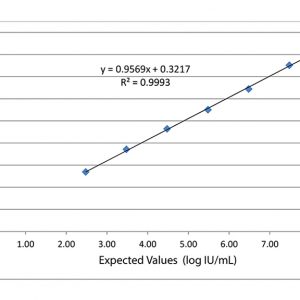
 Validate and Monitor your assays AccuSpan linearity panels from SeraCare are designed to span the dynamic range of quantitative infectious disease assays and evaluate instrumentation analytical sensitivity. Linearity panels effectively challenge assay performance at defined intervals to ensure consistency throughout the entire reportable range. In addition to linearity studies, these panels are useful in validation procedures for new assay implementation, operator training, and troubleshooting signs of assay deterioration.
 -
 Ensure reagents are operating effectively from lot-to-lot AccuTrak qualification panels from SeraCare are designed as a cost-effective solution to deliver the consistent results you need to gain confidence in your assay’s performance and ensure reagents are operating effectively from lot-to-lot. SeraCare's AccuTrak qualification panels are utilised by clinical laboratories worldwide to help strengthen quality control protocols and procedures for infectious disease diagnostic assays. With products for HIV, hepatitis, CMV, syphilis, HPV, and HTLV, SeraCare offers a comprehensive portfolio to help effectively monitor assay performance. Reliable, Consistent, Cost-Effective Solutions for Your Assay QC Program
 -
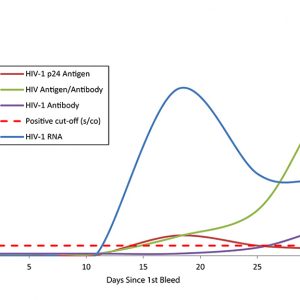 Assess your assay development milestones When your assay development requires natural patient specimens that represent the body’s true response to an infection, you can depend on AccuVert seroconversion panels as a gold standard with which to assess your assay development milestones. The SeraCare seroconversion panels are developed using raw, undiluted plasma collected from a single individual during the development of an infection and subsequent immunological response. Spanning an array of infectious diseases from HIV to hepatitis and syphilis, SeraCare's panels provide you with a diverse selection of products with high-quality datasets to help evaluate your assay. A Rich History in Seroconversion Panels SeraCare have been a trusted provider of seroconversion panels for over 30 years, IVD diagnostic manufacturers worldwide have used our panels in the development and validation of their assays for decades. As shown in the World Health Organisation HIV test evaluation kit reports, SeraCare HIV seroconversion panels have been used for comparative studies for HIV test kit evaluations, and are also frequently referenced in package inserts of leading IVD infectious disease platforms.
 -
 Whole-cell or whole-organism external controls Empower your results and challenge your methods with SeraCare’s ACCURUN® molecular controls and reference materials. ACCURUN molecular controls and reference materials are whole-cell or whole-organism external controls that help you monitor all aspects of your molecular testing methods and provide additional confidence in your laboratory test results. A well-designed QC program can help you avoid costly false-negative or false-positive results. ACCURUN molecular controls effectively detect low-positives closer to assay-specific cutoffs, enabling better detection of assay variability. Powerful ACCURUN controls and reference materials help to ensure complete control over assay performance monitoring. Monitors the Entire Testing Process. In order to execute the highest level of quality control, QC methods should be able to monitor the entire testing process, not just a portion. ACCURUN molecular controls are whole-cell or whole-organism controls that can appropriately challenge your assay from extraction through detection.
 -
Empower your results and challenge your methods with SeraCare’s ACCURUN® serology controls and reference materials. SeraCare's ACCURUN controls and reference materials are designed to be weakly reactive to help monitor your serology assays and provide additional confidence in your laboratory test results. Monitoring your assay performance can help you avoid costly repeats and, more importantly, avoid false-negative and false-positive results. With ACCURUN controls, you can troubleshoot your test methods and isolate system errors in your laboratory. Powerful ACCURUN controls and reference materials help to ensure complete control over assay performance monitoring. Challenges Your Assay More Effectively A low-positive control challenges your assay more than a medium-to-high control since it is closer to the assay cut-off; therefore, any variability in the assay will be easier to detect. Assay monitoring with ACCURUN single and multi-analyte controls improves confidence in your serology test results.
-

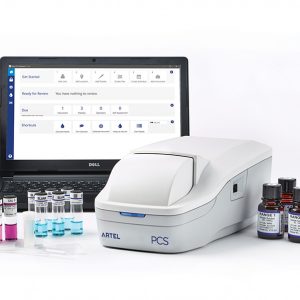 Ensure data integrity, reliable test results, and regulatory compliance. Easily calibrate pipettes, perform interim verifications, standardise operator skills, manage pipette inventory, and more with the Artel PCS® Pipette Calibration System. Fast, accurate, and precise, the PCS is a portable and easy-to-use volume verification system that simplifies single-channel pipette calibration, interim volume verification, and pipette user/operator training and competency assessment. Paired with the included PCS Software, the PCS helps you stay on top of your pipette inventory with calibration and interim verification scheduling, email notifications, pipette and pipette operator status, and comprehensive, auditable documentation. Easily meet both external regulatory requirements and internal quality standards to ensure data quality. The power of the PCS stems from the ratiometric photometry technology and standardised dye solutions that are used to measure dispensed volumes. The system is robust against differences in environmental conditions and calibration results are traceable to NIST standards, enabling straightforward comparison of pipettes, operators, methods, and locations.
 -
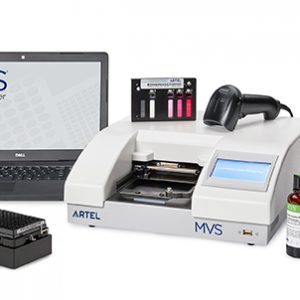 Accelerate assay optimisation, simplify regulatory compliance, and ensure quality. Understand and manage the performance of your automated liquid handlers, multichannel pipettes, labware, operators, and more. Compatible with virtually all automated liquid handling systems and multichannel handheld pipettes, the Artel MVS sits on a mobile workstation for portable rapid calibration, verifications and optimisation of dispensed volumes with high precision and accuracy. The MVS’s unique, dual-dye photometric measurements are robust against environmental influences and traceable to SI units to enable comparison across operators, protocols, equipment, and locations. Using the Calibrator Plate, Verification Plates, and an Artel-certified Plate Reader, the MVS supports an unbroken chain of traceability to national and international standards.
 -
 Ensure pipettes are performing properly and operator skills are standardised Manage your pipette calibration program and assess operator competency. Used in combination with the Artel PCS, the PCS Software ensures your pipettes and their operators are working together to generate accurate and reproducible results. The PCS Software provides scheduling for pipette calibrations and interim performance verifications; complete documentation and pipette inventory management, even for pipettes calibrated outside of PCS Software – and it’s ideal for standardising pipetting technique and assessing operator competency.
 -

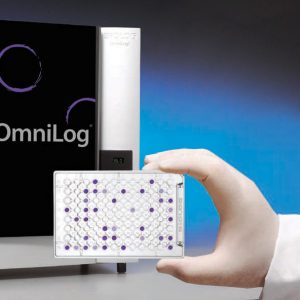 Full automation to meet the demands of a dynamic workflow The OmniLog® ID System offers a simple automated process to meet the dynamic workflow demands of a wide range of microbiology applications. Even organisms requiring special incubation temperatures or environments are easily accommodated, ensuring accurate identification for a broad spectrum of Gram-negative and Gram-positive bacteria. The OmniLog® ID System fully automates the process of microbial identification by incubating, reading and interpreting results from up to 50 Biolog MicroPlates™ at a time. The system software provides directives to guide all steps of the testing process for each MicroPlate™, including sample placement and removal and extended incubation when needed. Additional MicroPlates can be loaded and processed anytime there is an open tray or identification has been completed on a previously entered MicroPlate™. Up to date information for each MicroPlate™, including results as they become available, are continuously visible on the system’s menu screen. Identifications take as little as 2 hours. The OmniLog® Plus ID System adds testing capabilities for anaerobic bacteria, yeasts and filamentous fungi. Both OmniLog® systems allow results to be saved to create a customized database or to track specific organism characteristics and frequency of isolation. The system software, which includes the RetroSpect™ software module for organism tracking and trending, is extremely easy to navigate, and provides all the required functionality to meet 21CFR part 11 electronic record requirements and regulatory compliance. Administrative features are also available to control operator access and the creation or modification of data files.
 -
 CE Marked Routine Coagulation Controls from Biomedica Diagnostics are intended to be used as unassayed controls for monitoring the performance of routine coagulation assays on analysers in a clinical setting. The controls are to be tested in the same manner as freshly drawn citrated patient plasma. The controls are available within the normal and abnormal ranges and suitable for use in four (4) parameters.
 -

 Rapid, Automated and Remote Microbial Testing for Water and Food Safety Colifast ALARM™ is an electronic instrument for detecting indicator bacteria in drinking water using patented Colifast technology. 100 ml water samples are automatically collected at programmed intervals and analyzed for total coliforms, thermotolerant coliform bacteria or E. coli. In addition to performing rapid, online microbial water analysis, Colifast ALARM measures water turbidity. The system can automatically send results to control rooms / operators via LAN, digital signals or via mobile networks (SMS). The system can detect down to 1 cfu / 100 mL, and results are achieved within 6-14 / 15 hours. Technology The main components of Colifast ALARM are the incubator chamber, an injection pump system for fluid handling, and a detector system that includes wavelength-specific emitters combined with a spectrometer. Detection of down to 1 viable target bacteria is based on bacterial growth, group-specific enzyme activity and measured concentrations of a fluorescent product (ppb MU). An increase in the number of target bacteria means an increase in the amount of β-D-glucuronidase (E. coli-specific enzyme). The enzyme hydrolyses the growth medium substrate to MU (the fluorescent product) and β-D-glucuronic acid. Increased MU release gives increased fluorescence signal on the Colifast ALARM. Colifast growth medium contains inhibitors to prevent growth of non-coliforms. Colifast ALARM is verified by EPA's ETV program.
 -
 The Colifast At-Line Monitor – CALM is a fully automated early warning system for monitoring of coliforms and Pseudomonas aeruginosa in water. Detection time ranges from 2 to 12 hours. The technology is time-saving, cost-reducing, and environmentally friendly. Examples of CALM applications are monitoring of raw water, in-process water, waste water and recreational water. No laboratory facilities and minimal skills in microbiology are required to operate the instrument. The Colifast CALM is easily connected to the system computer or LAN interface. The patented Colifast growth media are supplied in Pre-filled Multi Well Trays™ and the flexibility of the system makes it easy to adapt to different applications. The CALM can perform parallel analysis of different target organisms. Depending on method and test frequency, the CALM needs monthly or weekly refilling of reagents. Technology The CALM instrument detects and quantifies E. coli, fecal or total coliform bacteria in water by fluorometric monitoring of β-glucuronidase activity (E. coli) or β-galactosidase activity (fecal and total coliforms). The detection of P. aeruginosa is based on substrate hydrolysis of aminopeptidase enzymes present in this bacterium. The Colifast technology is comprised of unique media formulations combined with instrument detection systems. The technology is covered by patents in numerous countries, with several international patents pending. Growth of other bacteria is stopped by inhibitors in the medium and by incubation of the samples at high temperature: Incubator temperatures for selection of thermotolerant coliform bacteria are 44 ° C and total coliforms / E. coli are 37 ° C. Method The instrument can perform one of two methods at a time. The Most Probable Number (MPN) method is based on the cultivation of bacteria. A certain volume is added to 4-6 wells of growth medium and the bacterial number is determined from how many of the wells that gave growth after the incubation period (11-12 hours). For the results to be as accurate as possible, it is therefore important that the samples taken on a given source usually give a mixture of positive and negative results. The rapid method is also a quantitative method, which is based on the enzyme activity of the bacteria present in the water sample. It provides response after 75-115 min and is suitable for water sources where major contamination events can occur. The CALM is a flexible instrument. This means that the instrument can be adapted to different locations with different occurrence of bacteria. If a source has an average bacterial count of 500 cfu / 100ml, 0.2 ml will usually give a positive test. By injecting about half of this volume, you will often get both positive and negative samples. If the source has lower concentrations of bacteria, the media concentration can be changed so that the sample volume can be as high as 10 ml. In this way, we ensure good results from the CALM instrument with optimal concentration of media after addition of sample and a sample volume appropriate for the source being measured.
 -
 Colifast Field Kit is a portable tool for field detection of coliform bacteria in water. The main method of the kit is a rapid method that provides an answer as early as 15 minutes, 2 hours at the latest. In addition, the kit includes methods for a quantitative MPN (Most Probable Number) method and presence/absence results. The procedure is very easy to perform, and requires no laboratory skills. Colifast Field Kit is delivered in a robust and portable metal case, and all equipment required for the water analysis is included. The Colifast Micro Detector (CMD) is used in combination with a growth medium for specific detection of target bacteria. Combined, they provide a simple instrumental analysis and rapid results that quantify the amount of coliform and thermotolerant bacteria in water. The method is based upon the patented technology of Colifast AS. The system detects down to 1 target bacterium per sample volume. Method The Colifast technology is based on a chemical reaction between a substrate in the growth medium and enzymes produced by the coliform bacteria. The bacterial enzyme β-D-galactosidase hydrolyses the substrate 4-methylumbelliferyl-β-D-galactoside, which results in the release of the fluorescent product 4-methylumbelliferone (MU). In addition to substrate, activators and growth factors, the medium comprises inhibitors that prevent the growth of non-coliform bacteria. The results are measured in fluorescent units. An increase in the number of bacteria corresponds to an increased amount of β-D-galactosidase (enzyme). The subsequent increase in the amount of MU (fluorescent product) results in a higher value on the instrument (Colifast Micro Detector). The incubation temperature selects for thermotolerant coliforms at 44 °C and total coliforms at 37 °C.
 -

 Innovative, real-time, Peer Comparison Software from Technopath Manufacturing Ltd. The web based system facilitates laboratories testing the same lot number of control material to access valuable information from their colleagues through peer comparison. The reports that are generated in IAMQC Peer compare the accuracy and precision of analytical processes between laboratories and peer groups. This information can be extremely valuable, indicating the user’s performance relative to their peer group and also providing powerful troubleshooting tools when attempting to resolve potential problems. To participate in IAMQC Peer, each individual laboratory submits their individual results or summary statistics (mean, standard deviation, and number of data points) to the central database maintained by Technopath Manufacturing Ltd. Laboratories data may be submitted manually on-line or, alternatively, captured by one of our many interfacing options. The information provided by IAMQC Peer can be used on a monthly basis to evaluate how well lab’s methods are operating, relative to the overall peer group. Users can also look at this peer data in real-time, interactive, tables online, when they are investigating a potential problem with accuracy or precision for an individual method.
 -
 Internal Quality Control Software from Technopath Manufacturing Ltd. IAMQC Daily is a comprehensive Internal Quality Control software that applies Westgard and/or any user-defined QC rules to individual QC results. The software automatically builds interactive Levey-Jennings charts and tables and provides summary and detailed customised reports to the end user. IAMQC Daily integrates with Microsoft Excel to produce customised electronic reports. The system also allows the import of pre-defined templates, resulting in instant system setups. Users can create audit trails, action logs and summary reports at the click of a button. IAMQC Daily comprises a centralised program that facilitates the analysis of multiple QC materials, across numerous departments in a laboratory setting. The system can also be integrated with IAMQC Peer to satisfy both Internal and External QC requirements. IAMQC Daily offers a centralised review of all QC data from all laboratories/instruments. Central administrator access facilitates managers to review QC performance at multiple facilities – no need to visit each laboratory site. Closer monitoring of QC from remote locations without additional costs provides a flexible option for managing the inter and intra-lab performance. The software works on an ‘open’ platform that allows the end user to add all types of control material from a range of laboratories. Both IAMQC Daily and Expert can run using an internet OR intranet connection. Each PC license allows the user to manage an unlimited number of departments, control materials (not limited to Technopath materials) and instruments. An unlimited number of user logins can be added to the system at any stage. An administrator module can also manage user logins, customising the functionality that is available to each user. All data can also be filtered using the same logic to apply a user-friendly atmosphere and save time scrolling through data.
 -
 Select QC Rules and make meaningful QC decisions IAMQC Expert, from Technopath Manufacturing Ltd, is an interactive system that helps front line laboratory staff select QC rules, reduce unnecessary repeats and make meaningful QC decisions. IAMQC Expert allows the end-user to monitor method performance relative to clinical requirements and focus on the tests that require their attention. Times and technologies are changing rapidly. Instruments and methodologies are more accurate, precise and stable than they were a decade ago. Most laboratories have adopted these new technical advances, but few have modified their QC processes to match. Many laboratories are still using a 1-2s rule as recommended by Levey and Jennings in 1951. Technopath Manufacturing Ltd have designed a QC system that will alert users to significant changes and not generate QC flags when the system is operating safely within acceptable limits. The system compares method performance to defined quality requirements (rather than to last month’s data) and recommends QC strategies that will warn users when QC data points exceed acceptable performance - with a minimal number of false flags. In the design of our QC system we “balance” the quality control system to meet the changing performance and stability of the analytical system.
 -

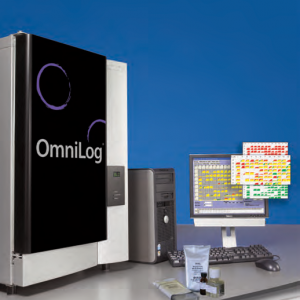 Phenotype MicroArrays for Microbial Cells Biolog's Phenotype MicroArray™ Technology enables researchers to characterise cells in up to 1,920 assays and evaluate cell changes under thousands of culture conditions and physiological states in a simple, rapid, efficient and cost-effective manner. By measuring a cell’s response to a genetic or environmental alteration, this integrated system of cellular assays, instrumentation, and bioinformatics software reveals invaluable information to speed insight and discovery and expedite scientific publication. Phenotype MicroArrays (PMs) have broad applicability for genotype-phenotype characterisation as well as for determining optimal conditions for cellular growth, sporulation and germination, production of secondary metabolites, or enzymatic activities in cell lines. Phenotype MicroArrays are a proven method of cellular screening that is extremely beneficial in a wide range of research applications:
- Discovering effects of loss or gain of gene function.
- Measuring/documenting changes in cell metabolism over time or under different environmental conditions.
- Improvement and QC of phenotypic stability of cell lines.
- Improved efficacy in the production of compounds in biological fermentation processes.
- Evaluation of new drug/antibiotic candidates in toxicological profiling and mode of action studies.
-
 Test gram negative and gram positive bacteria in the same test panel TECHNOPATH partners with Biolog for rapid and accurate identification of over 2,900 species of aerobic and anaerobic Bacteria, Yeasts, and Fungi using the Biolog Gen III Identification Phenotypic technology. Biolog’s advanced phenotypic technology provides valuable information on the properties of strains, in addition to a species-level identification. Molecular methods such as 16s sequencing and MALDI-TOF provide no information about the properties of the strain. Biolog’s carbon source utilisation technology identifies environmental and pathogenic microorganisms by producing a characteristic pattern or “metabolic fingerprint” from discrete test reactions performed within a 96 well microplate. Culture suspensions are tested with a panel of pre-selected assays, then incubated, read and compared to our extensive databases.
- No Gram Stain
- No pre-tests
- No follow-on tests
- One panel for both Gram Negative & Gram Positive bacteria
- One minute set-up
- Over 1350 species coverage
-
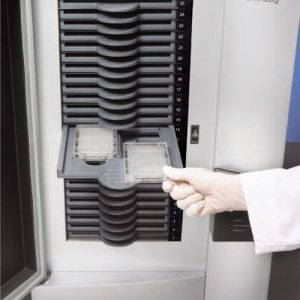 Fully Automated Phenotype MicroArray System The Biolog OmniLog® incubates and monitors 50 microplates, or 1,920 phenotypic assays simultaneously to measure physiological responses in diverse microbial cells. The OmniLog PM system includes software for analysis of Biolog Phenotype MicroArray panels. The OmniLog II Combo System has additional software and a database for identification of aerobic bacteria using Biolog’s Gen III microplates. The OmniLog II Combo Plus System adds the capability for identifying anaerobes, yeast and filamentous fungi. Each system includes the OmniLog instrument, software as indicated, multimedia computer, LCD flat panel monitor, 8-channel electronic pipettor, turbidimeter, user guide, training and 1-year warranty. The OmniLog II Combo system also include the Biolog MicroStation™ Reader and a printer. Organism databases (for microbial identification), consumables and other accessories are purchased separately.
Call Us: +44 (0)28-30833808