Call Us:IRL +353 (0)61-335844 / UK +44 (0)28 30833808

Shop

  • Bentley Instruments
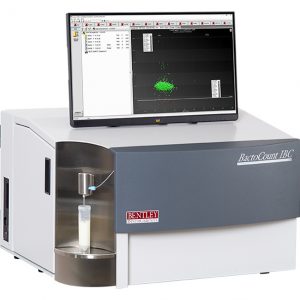
    Real-Time enumeration of individual Bacteria & Somatic Cells in raw milk Semi-Automatic version up to 50 analysis/hour The new BactoCount IBCm 3.0 is a semi-automated instrument that uses a proprietary process based on next-generation flow cytometry for the rapid, highly accurate, reliable and multiplex enumeration of individual bacteria and somatic cells in raw milk. The rapid test for bacteria and somatic cells makes it the ideal solution for any processing plant or laboratory involved in the quality assessment of milk. The instrument offers multiplex applications thanks to its unique dedicated platform. Up to two applications can be run simultaneously on a given sample. The overall design of the instrument has also been designed to allow ease of access and maintenance. With this in mind, IBCm 3.0 embeds a new kinetic, self aligned flow cell mounting system. The BactoCount IBCm 3.0 can be equipped with a conveyor, automating the sampling at a maximum rate of 50 analysis/hour. The sampling, sequencing and identification of the sample vials are functions performed by the Autosampler.
    Microval

    Validated to be at least equivalent to the EN-ISO 4833-1:2013 and 4833-2:2013 reference methods for the enumeration of microorganisms in raw cow milk (Certificate n° 2013LR44)

    Compatible with the ILAS 4000 ROBOT: Automation System for Bacteria Counter
  • Bentley Instruments
    Introducing the ILAS 3000 Robot The combination of the Bentley Instruments and high-tech robotics allows the complete automation and standardisation of the analytical chain and MSDs reduction. With the ILAS 3000 Robot, an operator can manage up to 3 lines simultaneously. Always with a goal of enhanced productivity and standardisation, this system analyses up to 600 samples/hour. Compatible with the Combi FTS Series: Infrared Analyser & Somatic Cells Counter and alternative methods. The Standardisation Tray used for Laboratory Automation is compatible with the ILAS Robot.
  • Bentley Instruments
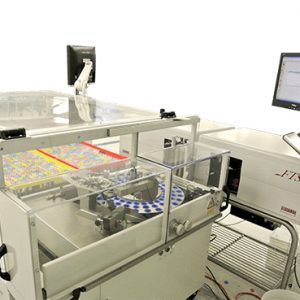
    Introducing the ILAS 4000 Robot The new ILAS 4000 robot is a unique solution to automate and standardise sample preparation for bacteria counters up to a maximum speed of 200 samples/hour. Fully refrigerated, samples are identified (RFID chips or barcode), homogenised, uncapped and analysed. The vials are automatically recapped after analysis and place back in their original tray position. Compatible with the BactoCount IBC Series: Bacteria & Somatic Cells Counter and alternative methods. The Standardisation Tray used for Laboratory Automation is compatible with the ILAS Robot.
  • Bentley Instruments
    Introducing the Sorter Robot The sorter robot is used to sort the samples and placed them in trays of different colours, depending on the desired analytical chain. Refrigerated to maintain samples quality, it sorts up to 6 different criteria.
  • Bentley Instruments
    Introducing the Capper Robot The capper robot is used to dispense the preservative and cap the vials up to a maximum speed of 2500 vials/hour. It can be equipped with an input/output stacker or a gravity roller depending on the space available.
  • Bentley Instruments
    For Laboratory, Milk Reception & Process Testing Bentley Instruments have designed devices to automate your milk samples preparation. Agiflex 270 - Homogenisation of samples before analysis Ideal for laboratory use when preparing samples before analysis, the Agiflex 270 is a compact device designed to homogenise all types of containers such as sample trays, racks, flasks and tubes. Adjustable rotation speed from 17 up to 52 rpm. Paraffin Dispenser The paraffin dispenser allows automatic dispensing of melted paraffin in vial or tube racks. Designed specifically to fit your containers, this dispenser is mainly composed of a set of automation and a customised trolley for carrying trays.
  • Bentley Instruments
    Tray 4x8 for Vials 60ml The Bentley Instruments tray is made of high-resistance ABS plastic (-18°C / +80°C) and identifiable by HF/LF RFID chips or barcode. It lets circulate water in a water bath, is stackable with fall blocking system and positions from 1 to 32 are indicated. Compatible with most vials (84 mm height max - diameter 36 mm max). Compatible with the ILAS 4000 Robot: Automation System for Bacteria Counter and the ILAS 3000 Robot: Automation System for Milk Analysers.
  • Drug Discovery with Biolog Technologies BiOLOG’s Phenotype MicroArray™ Technology for Microbial and Mammalian Cells, and new MitoPlate™ assays are used by pharmaceutical companies, biotech’s and academic institutions to assist with new drug target identification and drug re-purposing, and any applications in the process of developing solutions for the treatment and curing of disease. Benefits of Phenotype MicroArrays in Drug Discovery:
    • Complement DNA microarrays. DNA microarrays allow scientists to measure the expression of thousands of genes of a cell under one growth condition, whereas Phenotype MicroArrays allow scientists to measure the effect of one gene in the cell under thousands of growth conditions.
    • Provide rapid answers to critical questions about cellular properties in a simple, rapid, efficient, and cost- effective process.
    • Provide rapid answers to how a gene of unknown function affects a cell at a physiological level.
    • Provide cell-to-cell comparisons to find novel drug targets based on in vivo physiological differences.
    • Provide a means to assay the effect of a drug on thousands of cellular targets under thousands of physiological states of the cell.
    • Provide rapid answers to questions about how a new lead affects a cell at a biochemical level.
    • Provide information on how new drug leads compare to and interact with existing drugs.
    • Reduce the time and cost of slow and cumbersome animal, plant, or human studies in late development.
    • Eliminate unproductive leads and projects, saving substantial R&D budget dollars that would be wasted in later development.
  • PreBioM Microplates from Biolog
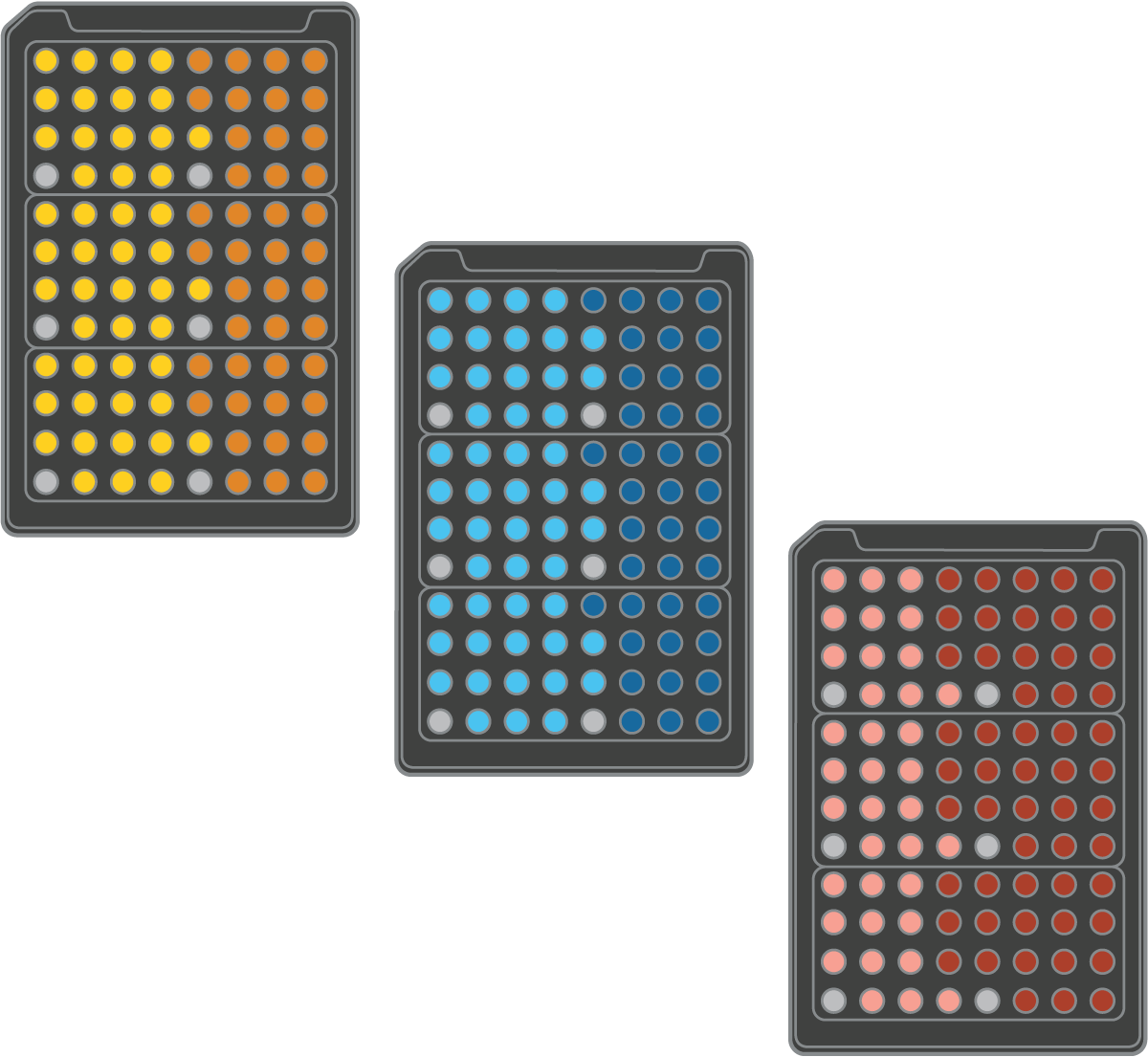
    PreBioM™ Microplates Introducing The PreBioM™ line of microplates from Biolog. The microplates allow researchers studying human or animal gut microbiome communities to better understand metabolism of prebiotics. PreBioM plates offer a multidimensional phenotype profiling solution based on the impact of prebiotics on microbial function. The three-plate system contains 90 unique prebiotic substrates tailored to investigate the intricate interplay between prebiotics and the microbiome. These plates consist of a curated selection of prebiotic substrates of various molecular weights designed to characterise bacterial species and their metabolic pathways. The PreBioM plates, combined with the Biolog Odin family of instruments and software, provide a high throughput phenotypic solution compatible with a wide range of species, including the obligate anaerobes inhabiting the gut microbiome as well as microbial communities.
  • EcoPlates™ Examine environmental community diversity with Biolog EcoPlates™. Biolog EcoPlates provide a sensitive and reliable index of environmental change. This approach, called community-level physiological profiling (CLPP), is effective at distinguishing spatial and temporal changes in the metabolism of microbial communities. Microbial communities provide useful information about environmental change. Microorganisms are present in virtually all environments and are typically the first organisms to react to chemical and physical changes in the environment. Changes in microbial communities are often a precursor to changes in the health and viability of the environment as a whole.
  • Analysing Mitochondria at Higher Resolution with MitoPlate™ Technology Analysing Mitochondria at higher resolution with Biolog Technology MitoPlates™ provide a powerful new research tool by allowing scientists to run preconfigured sets of 96 mitochondrial function assays in one experiment. Mitochondria can be interrogated and characterised in novel ways, looking at rates of substrate metabolism, sensitivity to drugs and other chemicals, and effects of mutations in mitochondria-related genes. Assay Principle Mitochondrial function is assayed by measuring the rates of electron flow into and through the electron transport chain from metabolic substrates that produce NAD(P)H or FADH2 such as L-malate, succinate, pyruvate, etc. Each substrate follows a different route, using different transporters to enter the mitochondria and different dehydrogenases to produce NAD(P)H or FADH2, The electrons travel from the beginning (complex 1 or 2) to the distal portion of the electron transport chain where a tetrazolium redox dye (MC) acts as a terminal electron acceptor that turns purple upon reduction. Additional MitoPlate assays probe the sensitivity of the mitochondria to a set of 22 diverse inhibitors. Investigate how mitochondria change with:
    • Cell differentiation
    • Cancer & Aging
    • Neurological disorders
    • Metabolic disorders
    • Immune cell activation
    • Bacterial/viral infection
    • Inborn genetic defects

    Download Brochure

  • Biolog Odin Family
    Phenotype MicroArrays for Mammalian Cells Using Biolog’s Phenotype MicroArray™ Technology, any type of cell can be characterised for metabolically related phenotypes in over 1,000 assays in a simple, rapid, and cost-effective manner. By measuring a cell’s metabolic activity, including responses to a genetic alteration or chemical stimuli, this integrated system of cellular assays, instrumentation, and bioinformatic software reveals unique and insightful information on metabolic pathway activities, and cellular sensitivity to nutrients, hormones, cytokines, anti-cancer agents, and ions. By measuring energy output of cells, the technology also provides new assays for understanding mitochondrial function and toxicity.  Phenotype MicroArrays enable insight and discovery to expedite scientific publications. This is accomplished using 96 well microplates, pre-loaded with hundreds of KEGG pathway-matched metabolic substrates, and metabolic effectors. Phenotype MicroArrays are a proven method of cellular screening that is beneficial in a wide range of research applications:
    • Genotype/phenotype studies
    • Cell line characterisation and QC
    • Cellular metabolism, metabolic disorders, nutrition
    • Cell energetics growth and death
    • Hormone effects on cells
    • Metabolic reprogramming in cancer, Warburg effect, anti-cancer drug sensitivity
    • Mitochondrial toxicology in chemical/drug screens
    • Stem cells and differentiation
    • Cell line and bio process development

    Download Brochure

Go to Top