-

 Internal Quality Control Software from Technopath Manufacturing Ltd. IAMQC Daily is a comprehensive Internal Quality Control software that applies Westgard and/or any user-defined QC rules to individual QC results. The software automatically builds interactive Levey-Jennings charts and tables and provides summary and detailed customised reports to the end user. IAMQC Daily integrates with Microsoft Excel to produce customised electronic reports. The system also allows the import of pre-defined templates, resulting in instant system setups. Users can create audit trails, action logs and summary reports at the click of a button. IAMQC Daily comprises a centralised program that facilitates the analysis of multiple QC materials, across numerous departments in a laboratory setting. The system can also be integrated with IAMQC Peer to satisfy both Internal and External QC requirements. IAMQC Daily offers a centralised review of all QC data from all laboratories/instruments. Central administrator access facilitates managers to review QC performance at multiple facilities – no need to visit each laboratory site. Closer monitoring of QC from remote locations without additional costs provides a flexible option for managing the inter and intra-lab performance. The software works on an ‘open’ platform that allows the end user to add all types of control material from a range of laboratories. Both IAMQC Daily and Expert can run using an internet OR intranet connection. Each PC license allows the user to manage an unlimited number of departments, control materials (not limited to Technopath materials) and instruments. An unlimited number of user logins can be added to the system at any stage. An administrator module can also manage user logins, customising the functionality that is available to each user. All data can also be filtered using the same logic to apply a user-friendly atmosphere and save time scrolling through data.
 -
 Innovative, real-time, Peer Comparison Software from Technopath Manufacturing Ltd. The web based system facilitates laboratories testing the same lot number of control material to access valuable information from their colleagues through peer comparison. The reports that are generated in IAMQC Peer compare the accuracy and precision of analytical processes between laboratories and peer groups. This information can be extremely valuable, indicating the user’s performance relative to their peer group and also providing powerful troubleshooting tools when attempting to resolve potential problems. To participate in IAMQC Peer, each individual laboratory submits their individual results or summary statistics (mean, standard deviation, and number of data points) to the central database maintained by Technopath Manufacturing Ltd. Laboratories data may be submitted manually on-line or, alternatively, captured by one of our many interfacing options. The information provided by IAMQC Peer can be used on a monthly basis to evaluate how well lab’s methods are operating, relative to the overall peer group. Users can also look at this peer data in real-time, interactive, tables online, when they are investigating a potential problem with accuracy or precision for an individual method.
 -
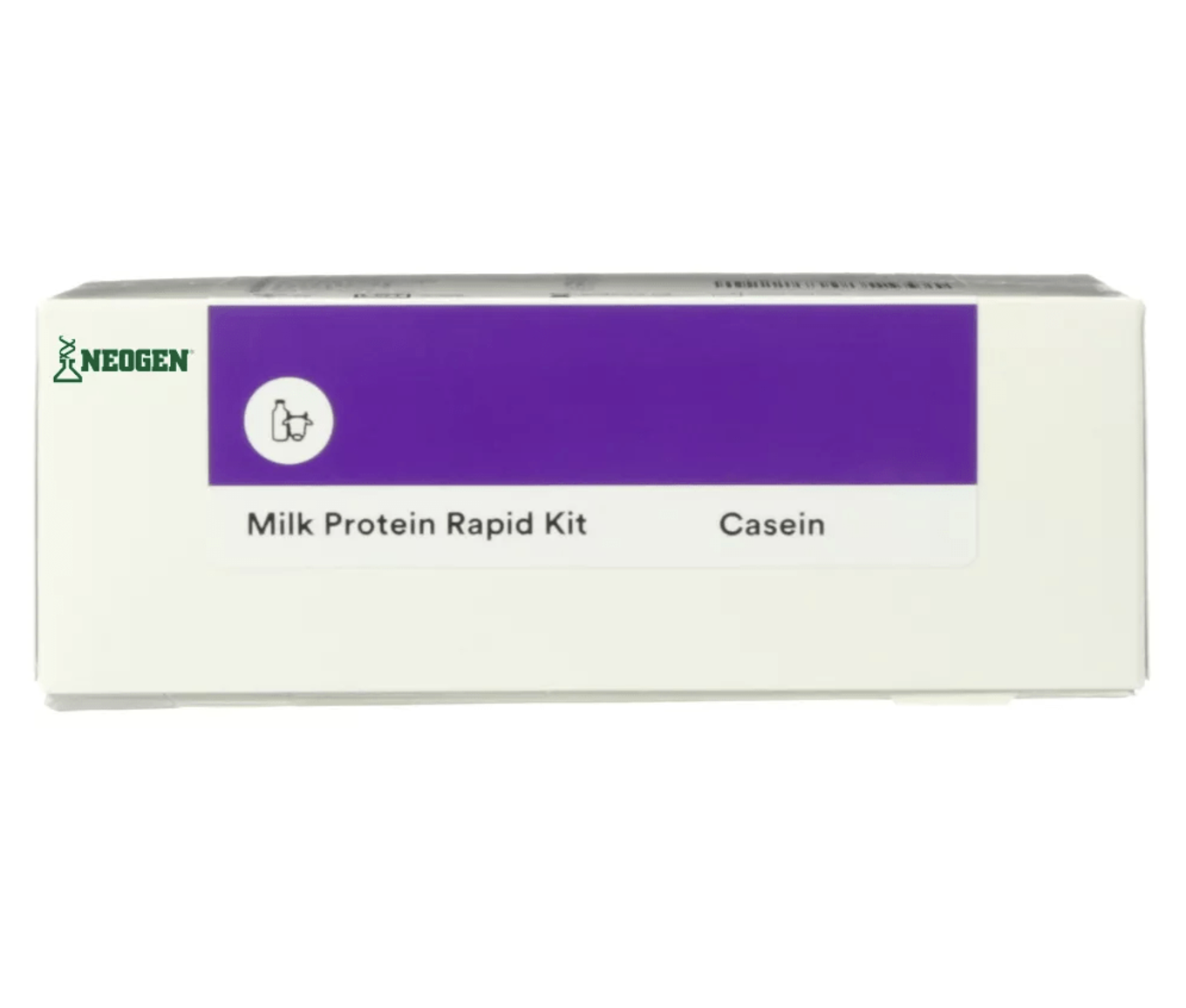 Lateral flow devices for specific allergen detection Streamline your process and simplify your allergen testing with 3Neogen Allergen Protein Rapid Tests – qualitative immunochromatographic assays for rapid in-plant monitoring of specific food allergens. Designed for accurate detection of processed and unprocessed allergen proteins, these fast, easy tests can be used for clean-in-place (CIP) final rinse water, environmental swab samples, raw ingredients and finished food products. We’ve taken the hassle out of allergen testing. You see the results.
 -

 Colifast Field Kit is a portable tool for field detection of coliform bacteria in water. The main method of the kit is a rapid method that provides an answer as early as 15 minutes, 2 hours at the latest. In addition, the kit includes methods for a quantitative MPN (Most Probable Number) method and presence/absence results. The procedure is very easy to perform, and requires no laboratory skills. Colifast Field Kit is delivered in a robust and portable metal case, and all equipment required for the water analysis is included. The Colifast Micro Detector (CMD) is used in combination with a growth medium for specific detection of target bacteria. Combined, they provide a simple instrumental analysis and rapid results that quantify the amount of coliform and thermotolerant bacteria in water. The method is based upon the patented technology of Colifast AS. The system detects down to 1 target bacterium per sample volume. Method The Colifast technology is based on a chemical reaction between a substrate in the growth medium and enzymes produced by the coliform bacteria. The bacterial enzyme β-D-galactosidase hydrolyses the substrate 4-methylumbelliferyl-β-D-galactoside, which results in the release of the fluorescent product 4-methylumbelliferone (MU). In addition to substrate, activators and growth factors, the medium comprises inhibitors that prevent the growth of non-coliform bacteria. The results are measured in fluorescent units. An increase in the number of bacteria corresponds to an increased amount of β-D-galactosidase (enzyme). The subsequent increase in the amount of MU (fluorescent product) results in a higher value on the instrument (Colifast Micro Detector). The incubation temperature selects for thermotolerant coliforms at 44 °C and total coliforms at 37 °C.
 -
 The Colifast At-Line Monitor – CALM is a fully automated early warning system for monitoring of coliforms and Pseudomonas aeruginosa in water. Detection time ranges from 2 to 12 hours. The technology is time-saving, cost-reducing, and environmentally friendly. Examples of CALM applications are monitoring of raw water, in-process water, waste water and recreational water. No laboratory facilities and minimal skills in microbiology are required to operate the instrument. The Colifast CALM is easily connected to the system computer or LAN interface. The patented Colifast growth media are supplied in Pre-filled Multi Well Trays™ and the flexibility of the system makes it easy to adapt to different applications. The CALM can perform parallel analysis of different target organisms. Depending on method and test frequency, the CALM needs monthly or weekly refilling of reagents. Technology The CALM instrument detects and quantifies E. coli, fecal or total coliform bacteria in water by fluorometric monitoring of β-glucuronidase activity (E. coli) or β-galactosidase activity (fecal and total coliforms). The detection of P. aeruginosa is based on substrate hydrolysis of aminopeptidase enzymes present in this bacterium. The Colifast technology is comprised of unique media formulations combined with instrument detection systems. The technology is covered by patents in numerous countries, with several international patents pending. Growth of other bacteria is stopped by inhibitors in the medium and by incubation of the samples at high temperature: Incubator temperatures for selection of thermotolerant coliform bacteria are 44 ° C and total coliforms / E. coli are 37 ° C. Method The instrument can perform one of two methods at a time. The Most Probable Number (MPN) method is based on the cultivation of bacteria. A certain volume is added to 4-6 wells of growth medium and the bacterial number is determined from how many of the wells that gave growth after the incubation period (11-12 hours). For the results to be as accurate as possible, it is therefore important that the samples taken on a given source usually give a mixture of positive and negative results. The rapid method is also a quantitative method, which is based on the enzyme activity of the bacteria present in the water sample. It provides response after 75-115 min and is suitable for water sources where major contamination events can occur. The CALM is a flexible instrument. This means that the instrument can be adapted to different locations with different occurrence of bacteria. If a source has an average bacterial count of 500 cfu / 100ml, 0.2 ml will usually give a positive test. By injecting about half of this volume, you will often get both positive and negative samples. If the source has lower concentrations of bacteria, the media concentration can be changed so that the sample volume can be as high as 10 ml. In this way, we ensure good results from the CALM instrument with optimal concentration of media after addition of sample and a sample volume appropriate for the source being measured.
 -
 Rapid, Automated and Remote Microbial Testing for Water and Food Safety Colifast ALARM™ is an electronic instrument for detecting indicator bacteria in drinking water using patented Colifast technology. 100 ml water samples are automatically collected at programmed intervals and analyzed for total coliforms, thermotolerant coliform bacteria or E. coli. In addition to performing rapid, online microbial water analysis, Colifast ALARM measures water turbidity. The system can automatically send results to control rooms / operators via LAN, digital signals or via mobile networks (SMS). The system can detect down to 1 cfu / 100 mL, and results are achieved within 6-14 / 15 hours. Technology The main components of Colifast ALARM are the incubator chamber, an injection pump system for fluid handling, and a detector system that includes wavelength-specific emitters combined with a spectrometer. Detection of down to 1 viable target bacteria is based on bacterial growth, group-specific enzyme activity and measured concentrations of a fluorescent product (ppb MU). An increase in the number of target bacteria means an increase in the amount of β-D-glucuronidase (E. coli-specific enzyme). The enzyme hydrolyses the growth medium substrate to MU (the fluorescent product) and β-D-glucuronic acid. Increased MU release gives increased fluorescence signal on the Colifast ALARM. Colifast growth medium contains inhibitors to prevent growth of non-coliforms. Colifast ALARM is verified by EPA's ETV program.
 -

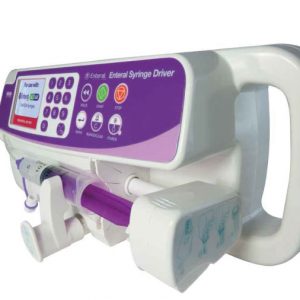 Enteral Syringe Driver For the application of enteral nutrition only. Deliver small volumes of enteral feed, accurately and safely, using enteral ENFit syringes.
 -
 Colostrum Gold Kit Kit for the collection and administration of Colostrum available with 1ml or 3ml syringes.
 -
 ENPLUG™ The ENPLUG™ is designed for emergency use to keep stomas from closing when a gastrostomy device has fallen out. The ENPLUG packs are available in 2 different lengths and various French sizes in case the stoma has already started to close and the current French gauge tube no longer fits the stoma.
 -

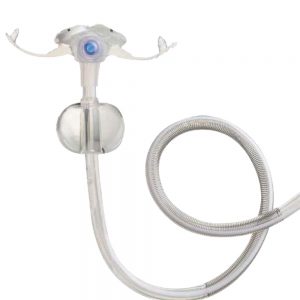 The AMT G-Jet The AMT G-Jet is a low profile Gastric-Jejunal enteral feeding tube which is used to help patients meet their nutritional needs by feeding directly into the small bowel whilst being able to vent the stomach at the same time. Just like the AMT’s Mini Compact Balloon Buttons, the G-JET Button’s balloon is shaped to cover more surface area and minimise leaks at the stoma site. It seals better to reduce leaks that can lead to gastric ulceration. Gastric holes are located immediately after balloon to ensure gastric-only access. Co-extruded radiopaque stripes provide clear radiographic identification. Mutually-exclusive ports. Ports and extension sets are colour-coded for visual differentiation. Available in 14Fr and 16Fr.
 -
 Enteral ISO-SAF Home Enteral ISO SAF Home, reusable enteral syringe with female ENFit connection (ISO 80369-3). Low dose connections are fitted to the 1ml and 3ml syringes.
- 1ml
- 3ml
- 5ml
- 10ml.
- 20ml
- 60ml
-
 Enteral Feeding Tube Extension Sets Mini Compact Feeding Sets (Extension sets) are available in various configurations. e.g: 2″ Straight Feeding Sets/Medication set are useful for flushing, right angle sets are preferred for feeding via a pump versus straight sets are more beneficial for bolus feeding.
Call Us:IRL +353 (0)61-335844 / UK +44 (0)28 30833808